 PartikelART Team | Apr 6, 2026
 Implementing Comprehensive Contamination Control in the Supply Chain
While standards like VDA 19.1 set the parameters, execution is what truly guards a manufacturing line’s margins. Contamination Control is not simply a laboratory audit process—it is a continuous philosophy that must be applied starting from the incoming components through to the final packaging.
Shifting from Discovery to Prevention
Traditionally, Partikel Cleanliness inspections happen late in the assembly chain, or worse, via external laboratories resulting in a 24-72 hour feedback loop. When a defect is discovered then, hundreds of components have already been assembled and are functionally compromised.
A complete contamination control architecture rests on:
- Incoming Goods Inspection: Implementing immediate 60-second partikel checks at the loading dock. Rejecting dirty batches from Tier-2 suppliers prevents contamination from ever entering your clean zones.
- Process Monitoring: Wash lines and component transfers are notorious for slowly building sediment. Sampling these vectors routinely catches filter breakdown.
- Environment and Operator Cleanliness: Training operators and checking ambient sedimentation completes the circle.
The PartikelART Solution
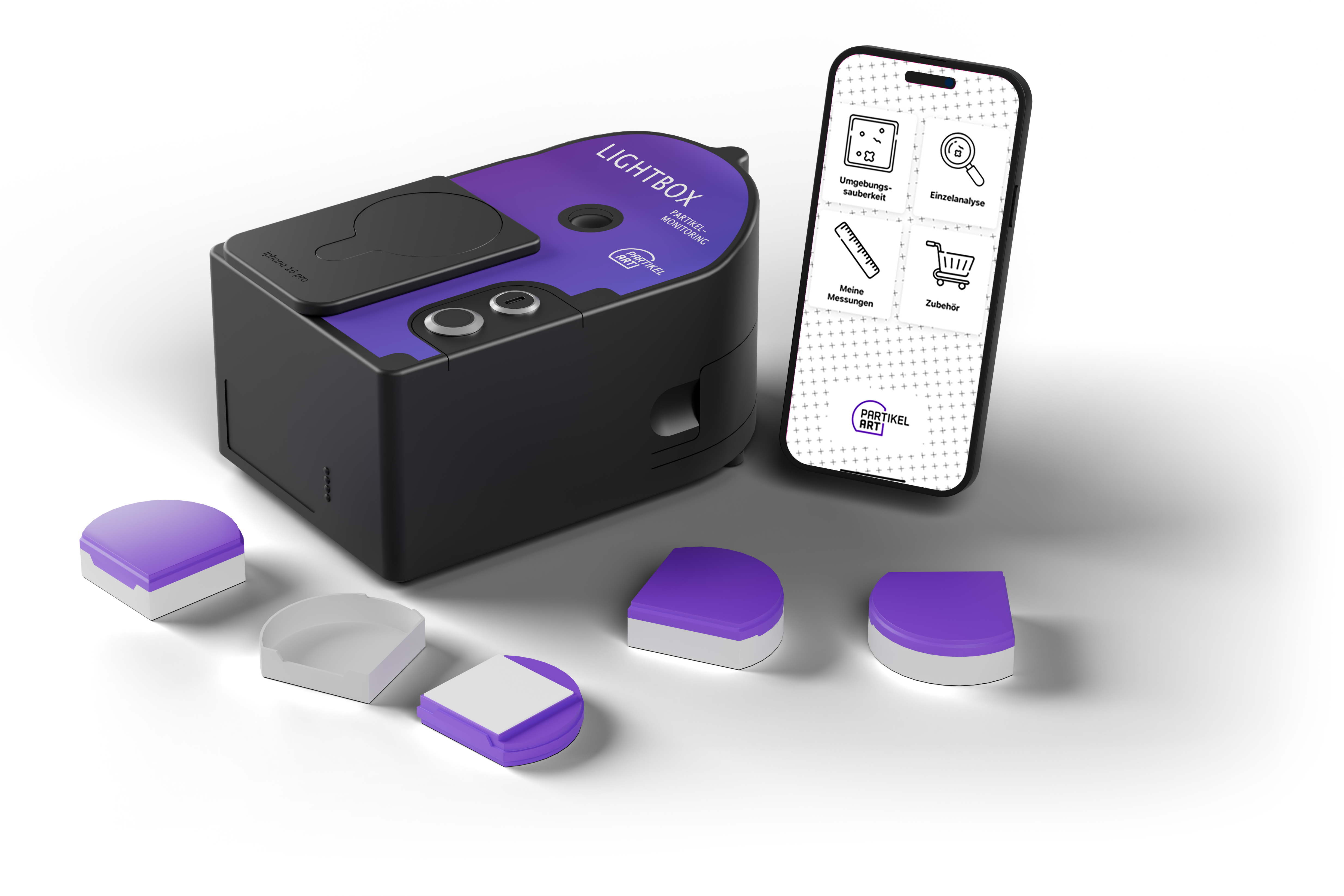
By integrating the PartikelART LensApp, Trace Pads, and Lightbox, companies skip the grueling learning curve associated with contamination audits.
Instead of treating cleanliness as a compliance tax, treat it as a process metric. As you establish routine monitoring, the data reveals specific wear patterns in your machinery, ultimately paving the way for predictive maintenance alongside higher yields. Start exploring your own Contamination Control implementation today.